Wall-Mounted vs. Freestanding Consoles
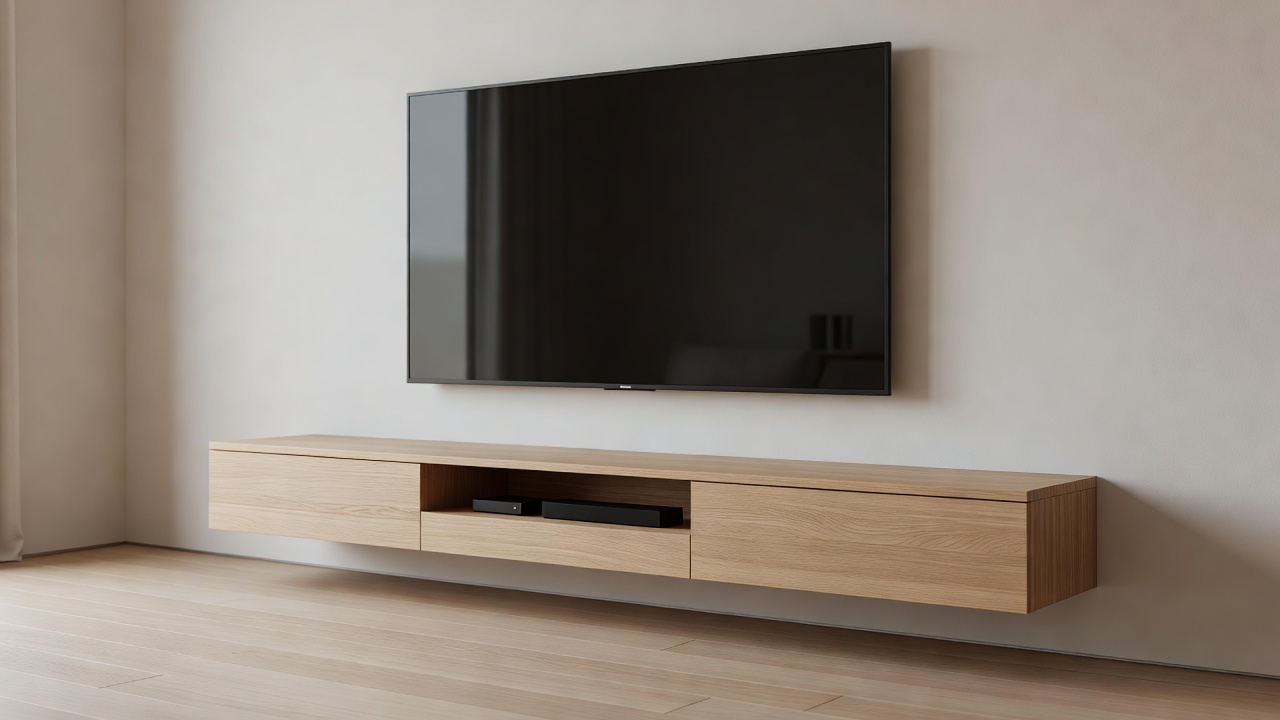
The decision between a traditional floor-standing console and a wall-mounted "floating" unit fundamentally alters the architecture of a room. This choice affects floor space, cleaning habits, storage capacity, and the complexity of installation. Both approaches have distinct structural prerequisites and visual outcomes.
The Case for Freestanding Consoles
Freestanding units are the default choice for the vast majority of households due to their plug-and-play nature. They require no drilling, no structural assessment of walls, and can be easily relocated if you decide to rearrange your living room or move to a new property.
Beyond convenience, traditional consoles offer superior utility:
- Maximum Storage: Floor units utilize the space from the ground up, providing deep drawers and tall cabinets ideal for physical media collections, vinyl records, or bulky electronics.
- Weight Capacity: A well-built floor stand transfers weight directly to the floor. They can confidently support the heaviest vintage equipment, stacks of amplifiers, and the television itself without stress.
- Hidden Wiring: Running cables is remarkably straightforward. Wires simply drop down behind the solid back of the unit, completely obscured from view without needing to open up drywall.
The Allure of Wall-Mounted Units
Wall-mounted, or floating, consoles offer an undeniably modern, bespoke aesthetic. By lifting the furniture off the ground, they expose the floorboards beneath, creating an optical illusion that makes the entire room feel more spacious and less cluttered.
The benefits of mounting include:
- Custom Height: You are not restricted by the manufacturer's chosen leg height. You can mount the unit at the exact millimeter required for your perfect ergonomic viewing angle.
- Unhindered Cleaning: Vacuuming or mopping beneath a floating unit takes seconds, eliminating the frustrating dust accumulation common under low-profile floor stands.
- Minimalist Profile: Floating units are typically shallower than floor models, projecting less into the walkway of the room.
The Reality of Installation
The critical barrier to floating consoles is the installation process. You cannot simply screw a heavy piece of furniture into drywall; it must be anchored securely into wooden or metal wall studs.
If your studs do not align perfectly with your desired television placement, you may be forced to mount the console off-center, or you will need to open the wall to install horizontal blocking between the studs—a significant construction project.
Furthermore, while floating consoles look incredibly clean, achieving that look requires hiding the cables. This means routing power cords and HDMI cables through the wall cavity behind the drywall. If you live in a rental property or possess brick/masonry walls, hiding cables internally ranges from difficult to strictly prohibited.
Making the Choice
If you prioritize maximum storage, frequent layout changes, or simple setup, a freestanding unit is the pragmatic choice. If you own your home, are willing to undertake light renovation work for cable management, and prioritize a clean, spacious, modern aesthetic, a wall-mounted console offers an architectural upgrade to your living space.